History of Porter beer
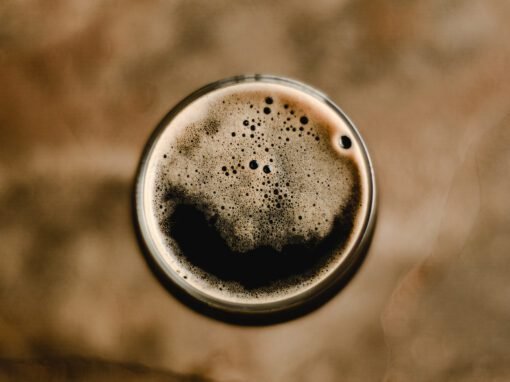
Porter is a dark beer that developed in early 18th-century London, most likely as an improved, well-aged version of ordinary brown beer. The name is usually linked to street and river porters. It became one of the first mass-produced beers, nearly died out in the 20th century and was revived by craft brewers in the 1980s.
Free download
Home Bar Storage Chart (PDF): How long liqueurs, spirits, wine and mixers last, opened and unopened. 25 rows, each with its source.
Thank you
Your chart is ready
We use your email only for this download.Also free:
Milk and Dairy Storage Chart (PDF)Juice, Soda and Water Storage Chart (PDF)Coffee, Tea and Hot Drinks Storage Chart (PDF)Drink Strength, Calories and Units Cheat Sheet (PDF)Want the full pack? About 10 printable sheets: a larger chart for each drink type, a “has it gone off?” checklist, date labels, a party planner and an inventory sheet.
In this article
Where did porter come from?
Porter emerged in London in the early 1700s. Most beer historians believe it grew out of aged, hoppier versions of the city’s brown beer. It was the first style aged at the brewery, so it was ready to drink when a publican bought it. The name is usually linked to the street and river porters who drank it.
Myths to treat with caution
- The “three threads” story: the tale that drinkers mixed three beers and porter was invented to save the barman the trouble is probably untrue.
- Ralph Harwood and “Entire”: the story that Harwood of the Bell Brewhouse invented porter in 1722 is called almost certainly untrue by one source.
Timeline
- 1700s: porter develops in London and becomes arguably the first mass-produced commercial beer. Demand peaked in the 1820s.
- 1814: a vat at the Meux brewery burst and flooded London streets with porter, killing eight people.
- 1817: Daniel Wheeler’s patent malt roaster produced darker roasted malts, letting brewers use less of the costlier pale malt.
- Late 1800s to early 1900s: demand shifted to lighter beers and stouts, and World War I restrictions cut porter production further.
- 1930s to 1970s: porter was seen as an old man’s beer and was nearly extinct.
- Early 1980s: porter was revived in the US home-brewing and microbrewing movement.
Porter and stout
Stout began as a stronger porter. Arthur Guinness brewed only porter in early 19th-century Ireland, then developed a stronger version called stout porter.
Porter today
- Colors range from ruby-black to deep brown.
- Common flavors: chocolate, caramel, licorice.
- Modern sub-styles include English (Brown and Robust), American and Baltic porter. Baltic porters are stronger; the BJCP guideline range is 6.5% to 9.5% ABV.
Historical details differ between sources; treat dates as approximate.
People also ask
Who invented porter beer?
No single inventor is documented. Most scholars say London brewers developed it from brown beer in the early 1700s.
Why is it called porter?
The name is usually linked to the London street and river porters who drank it.
Is porter the same as stout?
Closely related. Stout began as a stronger porter, and the lines between modern styles blur.
Sources
About · How we verify this · Editorial policy · Corrections
What would help you most next?
One tap. Anonymous. It helps us decide what to build.
Thank you. The free charts above are yours to keep.