History of Dunkel Lager beer
Dunkel is a dark Bavarian lager. The Beer Judge Certification Program says Spaten developed Munich dunkel in the 1830s, after Munich malt was developed, as a successor to the dark regional beers of the time. It is malty and toasty, not roasty, with about 4.5 to 5.6 percent ABV.
Free download
Home Bar Storage Chart (PDF): How long liqueurs, spirits, wine and mixers last, opened and unopened. 25 rows, each with its source.
Thank you
Your chart is ready
We use your email only for this download.Also free:
Milk and Dairy Storage Chart (PDF)Juice, Soda and Water Storage Chart (PDF)Coffee, Tea and Hot Drinks Storage Chart (PDF)Drink Strength, Calories and Units Cheat Sheet (PDF)Want the full pack? About 10 printable sheets: a larger chart for each drink type, a “has it gone off?” checklist, date labels, a party planner and an inventory sheet.
In this article
What is a dunkel lager?
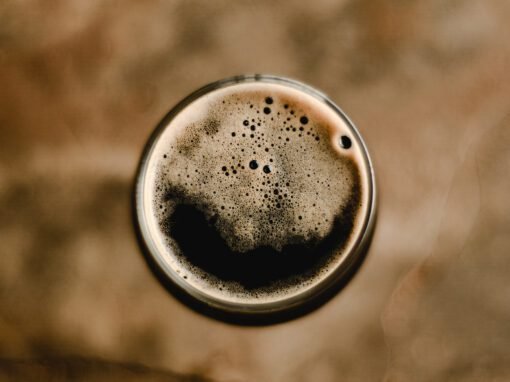
Dunkel is German for dark. Munich dunkel is a malty, brown Bavarian lager with a deeply toasted, bready malt flavor and no roasty or burnt notes. It is smooth and rich, with restrained bitterness and a fairly dry finish.
A short history
According to the Beer Judge Certification Program (BJCP), Spaten developed Munich dunkel in the 1830s, after Munich malt was developed, and it was considered a successor to the dark regional beers of its time. The style then spread across Bavaria, especially Franconia. Other brewing writers trace dark Bavarian beer back much further, to monastery brewing and the late Middle Ages, and accounts differ on exact dates, so treat early history as approximate.
Why it is dark but smooth
The color and flavor come mainly from Munich malt, a malt that gives a toasty, bready taste. Unlike a stout, a dunkel is not meant to taste roasted or burnt. It is a lager, so it is fermented cold and finishes clean.
Style numbers (BJCP 2021)
| Trait | Typical range |
|---|---|
| ABV | 4.5 to 5.6 percent |
| Bitterness | 18 to 28 IBU |
| Color | Deep copper to dark brown, often with a red or garnet tint |
| Head | Creamy, light to medium tan |
Dunkel examples
The BJCP lists these Bavarian examples: Ayinger Altbairisch Dunkel, Ettaler Kloster-Dunkel, Hacker-Pschorr Munchner Dunkel, Hofbrauhaus Dunkel, Eittinger Urtyp Dunkel and Weltenburger Kloster Barock-Dunkel. These are examples of the style, not a ranking.
How to serve and enjoy it
- Serve cool, not ice cold, so the malt shows.
- A tall lager or wheat-style glass works well.
- Pairs naturally with roast pork, sausages, pretzels and cheese.
General information. Alcohol content varies by brand, so check the label.
People also ask
When was dunkel lager created?
The BJCP says Spaten developed Munich dunkel in the 1830s, after Munich malt was developed. Other accounts describe older dark Bavarian beers.
What does dunkel lager taste like?
Toasty, bready malt with restrained bitterness and a medium-dry finish. It should not taste roasted or burnt.
How strong is dunkel?
Typically about 4.5 to 5.6 percent ABV, per the BJCP style guidelines.
Sources
About · How we verify this · Editorial policy · Corrections
What would help you most next?
One tap. Anonymous. It helps us decide what to build.
Thank you. The free charts above are yours to keep.